Introduction
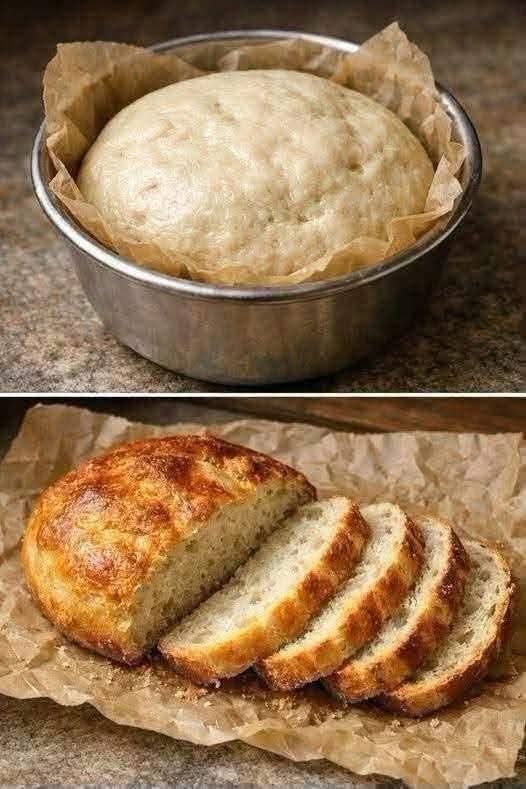
This rustic homemade bread is wonderfully simple: a soft, airy interior surrounded by a beautifully golden, crisp crust. Baked in a covered pot or Dutch oven, it develops a bakery-style crust without requiring complicated equipment or advanced bread-making skills.
Origin
The technique is inspired by traditional European rustic breads, where simple combinations of flour, water, yeast, and salt were transformed into hearty loaves. The modern no-knead bread method became especially popular because it produces excellent texture with very little hands-on work.
Cultural Significance
Homemade bread has long been an important part of food traditions around the world. A freshly baked loaf often represents comfort, hospitality, family gatherings, and the pleasure of sharing simple food. Rustic bread is particularly appreciated for its uncomplicated ingredients and traditional appearance.
Ingredients Quantity
Makes 1 large loaf
- 3 cups (375 g) all-purpose or bread flour
- 1½ cups (360 ml) warm water
- 1½ teaspoons salt
- 1 teaspoon instant or active dry yeast
- 1 teaspoon sugar or honey
- 1 tablespoon olive oil, optional
- Extra flour, for shaping
Optional Additions
For a different flavor, you can add:
- 1–2 tablespoons dried herbs
- 1 teaspoon garlic powder
- 2 tablespoons grated Parmesan
- 2 tablespoons seeds such as sesame or sunflower seeds
- ¼ cup chopped olives
- ¼ cup shredded cheese
- A small handful of chopped walnuts
Tips for Success
- Use warm, not hot, water so you don’t damage the yeast.
- The dough should be soft and slightly sticky.
- Give the dough enough time to rise; this helps create a lighter texture.
- Preheat the baking pot thoroughly before adding the dough.
- Keep the lid on during the first part of baking to trap steam and create a crisp crust.
- Allow the bread to cool before slicing so the inside can finish setting.
Instructions
1. Make the Dough
In a large bowl, combine the flour, yeast, salt, and sugar. Add the warm water and olive oil, if using. Stir until a sticky, shaggy dough forms.
2. Let It Rise
Cover the bowl with plastic wrap or a clean kitchen towel. Leave it at room temperature for approximately 1½–2 hours, or until the dough has noticeably increased in size.
3. Shape
Lightly flour your work surface. Transfer the dough onto it and gently shape it into a round loaf. Avoid excessive kneading.
4. Prepare the Pot
Place parchment paper inside a Dutch oven or oven-safe heavy pot. Preheat the oven to 450°F (230°C) with the empty pot and lid inside for about 25–30 minutes.
5. Bake
Carefully place the dough into the hot pot using the parchment paper. Cover with the lid and bake for 25–30 minutes.
Remove the lid and continue baking for another 10–15 minutes, until the bread is deeply golden brown.
6. Cool
Remove the loaf from the pot and place it on a wire rack. Let it cool for at least 30–45 minutes before slicing.
Description
The finished loaf has a crisp, golden-brown crust with a tender, slightly chewy center. It is delicious sliced thickly and served warm with butter, olive oil, cheese, soup, eggs, or your favorite sandwich fillings.
Nutritional Information
Approximate per serving, assuming 10 slices:
- Calories: ~160–180 kcal
- Carbohydrates: ~32–35 g
- Protein: ~5–6 g
- Fat: ~1–3 g
- Fiber: ~1–2 g
- Sodium: ~300–350 mg
Values are estimates and will vary according to the flour, portion size, and optional ingredients used.
Conclusion
This rustic no-knead bread proves that delicious homemade bread doesn’t have to be complicated. With a handful of basic ingredients, patience, and a hot covered pot, you can create a beautiful loaf with a crisp crust and satisfying texture.
Recommendation
Serve it fresh with butter, homemade jam, olive oil and herbs, cheese, or a bowl of warm soup. It also makes excellent toast the following day.
Embracing Healthful Indulgence
Homemade bread gives you control over the ingredients and allows you to avoid unnecessary additives found in some packaged breads. For a more nutritious loaf, replace part of the white flour with whole-wheat flour, add seeds, or serve smaller portions alongside vegetables, lean proteins, or soup. The goal is to enjoy the comforting pleasure of fresh bread while keeping the overall meal balanced.