1. Introduction
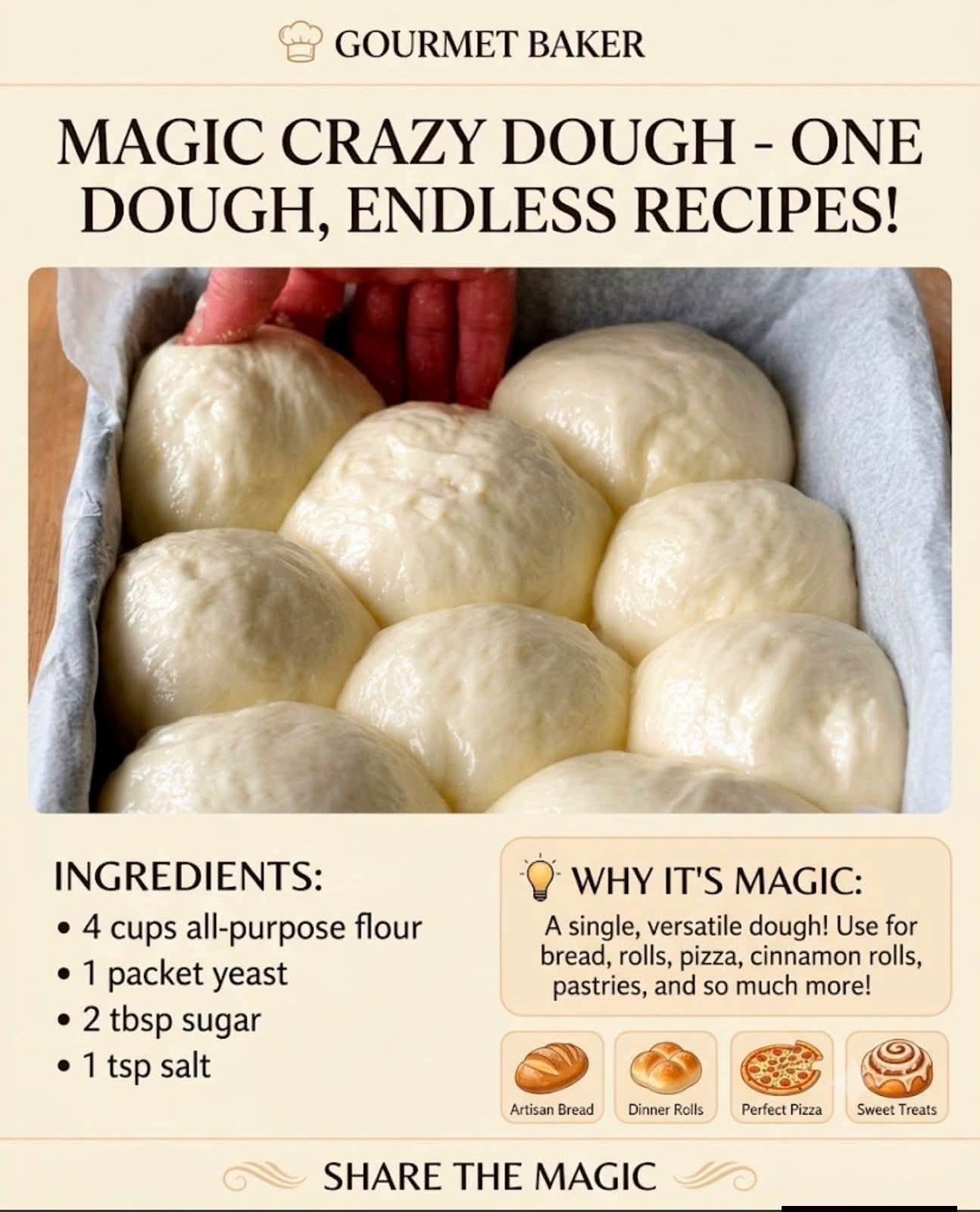
Magic Crazy Dough is a versatile, homemade yeast dough that can be transformed into a wide variety of delicious baked goods. From soft dinner rolls and fluffy bread to homemade pizza, cinnamon rolls, and sweet pastries, this recipe offers endless possibilities using one simple dough. It is an excellent choice for home bakers who want a reliable, budget-friendly recipe that works for both sweet and savory creations.
2. Origin
The idea of using one basic yeast dough for multiple baked goods comes from traditional home baking, where simple ingredients such as flour, yeast, water, sugar, and salt have been used for generations. Many cultures have developed their own variations of versatile bread doughs, adapting them to local ingredients and culinary traditions.
Although the exact origin of the name “Magic Crazy Dough” is unclear, the concept celebrates the creativity and practicality of homemade baking.
3. Cultural Significance
Bread and yeast-based pastries hold an important place in food traditions around the world. From European dinner rolls to Mediterranean flatbreads and American homemade cinnamon rolls, dough-based recipes bring families together and create opportunities to share comforting, freshly baked food.
Magic Crazy Dough reflects this tradition by offering a flexible foundation for family meals, holiday gatherings, celebrations, and everyday baking.
4. Ingredients Quantity
Ingredients for the basic dough
- 4 cups all-purpose flour (approximately 480–500 g)
- 1 packet active dry yeast (approximately 7 g)
- 2 tablespoons granulated sugar
- 1 teaspoon salt
- 1½ cups warm water or warm milk (approximately 360 ml, adjusted as needed)
- ¼ cup vegetable oil or melted butter (approximately 60 ml)
Note: The image lists flour, yeast, sugar, and salt but does not show the complete recipe. The liquid and fat quantities above are suggested additions to make a workable dough.
5. Optional Additions
Customize your dough according to the recipe you want to make.
- For soft dinner rolls: Use warm milk and melted butter.
- For pizza: Add 1 tablespoon olive oil and your favorite herbs.
- For cinnamon rolls: Add a little vanilla extract and use cinnamon sugar filling.
- For savory bread: Mix in garlic powder, dried oregano, or grated cheese.
- For sweet pastries: Add an extra tablespoon of sugar and a little lemon zest.
- For seeded bread: Sprinkle sesame seeds, poppy seeds, or sunflower seeds on top.
6. Tips for Success
- Use warm liquid, not hot, to protect the yeast. Aim for approximately 38–43°C (100–110°F) when using active dry yeast.
- Check that your yeast is fresh and active before beginning.
- Add the liquid gradually because different flours absorb different amounts of moisture.
- Knead the dough for about 8–10 minutes, until smooth and elastic.
- Allow enough time for the dough to rise in a warm, draft-free place.
- Avoid adding too much flour, as this can make the finished bread dense and dry.
- Brush rolls with melted butter after baking for a softer crust and richer flavor.
- Adjust baking temperature and time according to the final product you choose to make.
7. Instructions
Step 1: Activate the yeast
Combine the warm water or milk with the sugar and yeast. Let it stand for 5–10 minutes if using active dry yeast, until foamy.
Step 2: Combine the ingredients
In a large mixing bowl, combine the flour and salt. Add the yeast mixture and vegetable oil or melted butter.
Step 3: Knead the dough
Mix until a dough forms, then knead for 8–10 minutes by hand or 5–7 minutes with a stand mixer fitted with a dough hook. The dough should feel soft and slightly tacky.
Step 4: Let the dough rise
Place the dough in a lightly greased bowl and cover it. Let it rise for approximately 60–90 minutes, or until doubled in size.
Step 5: Shape your creations
Gently deflate the dough and divide it into portions. Shape it into dinner rolls, bread loaves, pizza bases, cinnamon rolls, or other baked treats.
Step 6: Allow a second rise
Place the shaped dough on a prepared baking tray or in a baking pan. Cover and let it rise for another 20–40 minutes, depending on the shape and room temperature.
Step 7: Bake
Bake according to your chosen recipe. As a general guide, dinner rolls can bake at 180°C (350°F) for 18–25 minutes, while pizza and larger loaves require different temperatures and baking times.
Step 8: Cool and serve
Allow the baked goods to cool slightly before serving. Enjoy them warm, fresh, and customized to your taste.
8. Description
Magic Crazy Dough is a soft, adaptable yeast dough that bakes into a tender interior with a beautifully golden exterior. Its neutral flavor makes it suitable for savory dishes as well as sweet treats. Whether shaped into fluffy rolls, a rustic loaf, homemade pizza, or cinnamon-filled pastries, this dough provides a convenient starting point for countless baking adventures.
9. Nutritional Information
The following is an approximate estimate for the suggested basic recipe, assuming it makes 12 equal portions.
| Nutrient | Per portion |
|---|---|
| Calories | 215–230 kcal |
| Carbohydrates | 35–39 g |
| Protein | 5–6 g |
| Fat | 5–6 g |
| Fiber | 1–2 g |
| Sugar | 2–3 g |
| Sodium | 150–220 mg |
Nutritional values vary with the flour brand, liquid, fat used, portion size, and any additional fillings or toppings. Adding cheese, butter, sugar, or other ingredients will change the final nutritional content.
10. Conclusion
Magic Crazy Dough is a practical recipe that makes homemade baking easier and more enjoyable. With a handful of basic ingredients and a little patience, you can prepare a dough that suits many different occasions. Its versatility makes it a valuable addition to any home baker’s collection, whether you are preparing everyday bread or something special for family and friends.
11. Recommendation
Try making a batch at the beginning of the week and dividing it into portions for different recipes. You can prepare soft dinner rolls for meals, a pizza for family night, or sweet cinnamon rolls for breakfast.
For the best results, follow the same basic dough method while adjusting the shaping, fillings, and baking instructions to suit each creation.
12. Embracing Healthful Indulgence
Homemade baking allows you to control the ingredients and adjust recipes to suit your preferences. You can replace some of the all-purpose flour with whole-wheat flour, use olive oil instead of butter, or reduce the sugar when preparing savory bread.