1. Introduction
Homemade dough is the foundation of countless delicious baked creations. Whether you’re preparing flaky puff pastry, a buttery pie crust, soft pizza dough, or perfectly layered croissants, learning how to make these four classic doughs at home can transform your baking experience.
Each dough has its own unique texture, flavor, and preparation method. With simple ingredients such as flour, butter, yeast, water, and salt, you can create bakery-quality results right in your kitchen.
This guide shares four essential homemade dough recipes, complete with ingredient quantities, preparation instructions, and helpful tips to make your baking easier and more enjoyable.
2. Origin
These four dough varieties have different culinary histories.
- Puff Pastry: This delicate, layered pastry has roots in European baking, particularly French cuisine. Its signature flaky texture comes from repeatedly folding butter into dough.
- Pie Crust: Pie pastry has a long history in European cooking, where pastry shells were traditionally used to hold sweet and savory fillings.
- Pizza Dough: Originating in Italy, particularly Naples, pizza dough became famous for its simple combination of flour, water, yeast, and salt.
- Croissant Dough: Croissants are strongly associated with French baking traditions. Their characteristic buttery layers are created through a technique called lamination.
Today, these doughs are enjoyed worldwide and remain essential foundations of both traditional and modern baking.
3. Cultural Significance
Dough preparation is an important part of food traditions across many cultures.
In France, croissants and puff pastry represent the artistry of traditional bakeries. In Italy, pizza dough brings families and friends together around homemade meals.
Pie crusts are especially popular in American and European baking, often appearing during holidays, celebrations, and family gatherings.
These recipes also encourage home baking, allowing people to experiment with different ingredients, fillings, and flavors while preserving traditional cooking techniques.
4. Ingredients Quantity


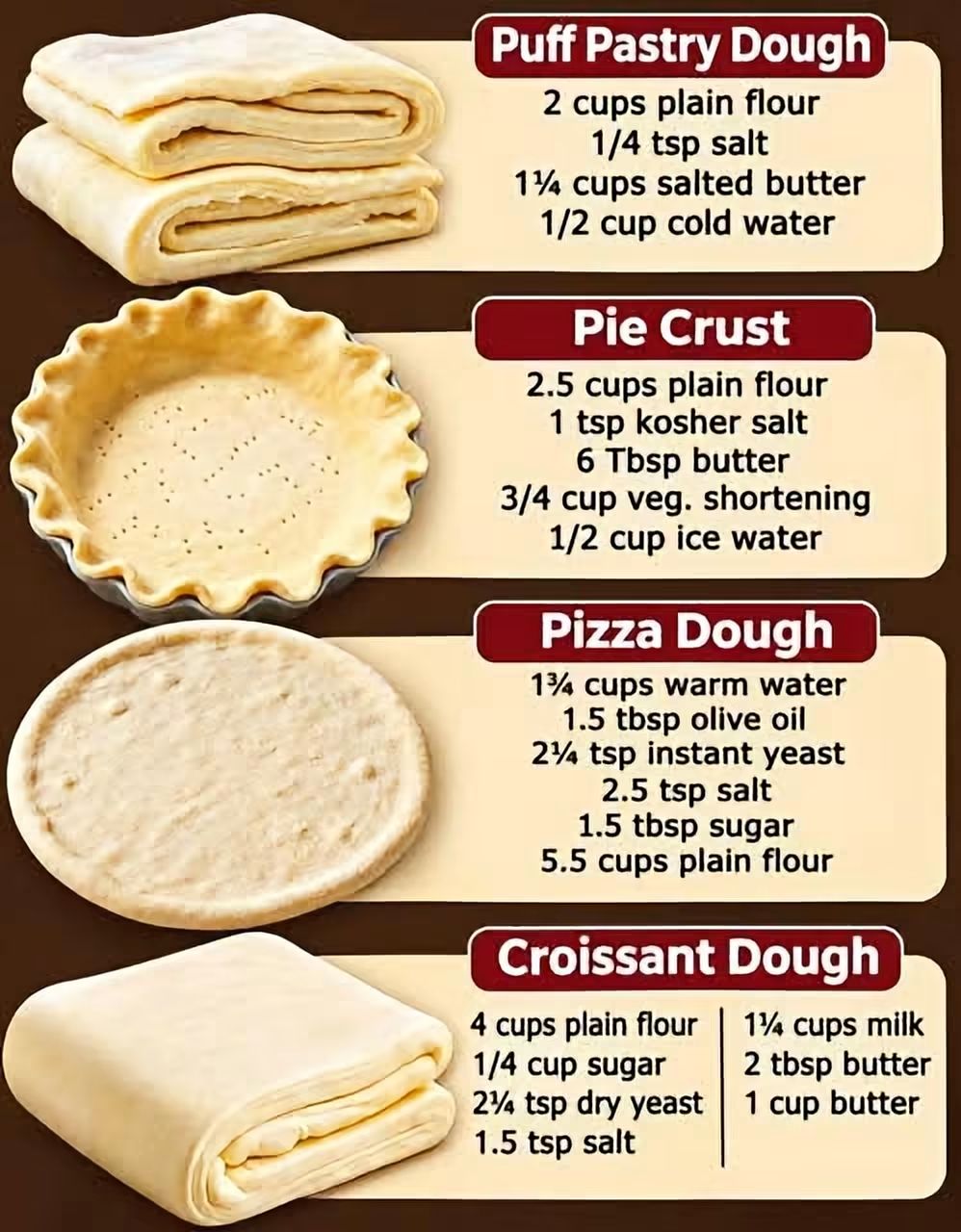
A. Homemade Puff Pastry Dough
Ingredients:
- 2 cups plain flour
- 1/4 teaspoon salt
- 1 1/4 cups salted butter, cold
- 1/2 cup cold water
B. Homemade Pie Crust
Ingredients:
- 2 1/2 cups plain flour
- 1 teaspoon kosher salt
- 6 tablespoons butter, cold
- 3/4 cup vegetable shortening
- 1/2 cup ice water
C. Homemade Pizza Dough
Ingredients:
- 1 3/4 cups warm water
- 1 1/2 tablespoons olive oil
- 2 1/4 teaspoons instant yeast
- 2 1/2 teaspoons salt
- 1 1/2 tablespoons sugar
- 5 1/2 cups plain flour
D. Homemade Croissant Dough
Ingredients:
- 4 cups plain flour
- 1/4 cup sugar
- 2 1/4 teaspoons dry yeast
- 1 1/2 teaspoons salt
- 1 1/4 cups milk
- 2 tablespoons butter
- 1 cup cold butter for lamination
5. Optional Additions
You can customize these dough recipes depending on what you’re preparing.
- Puff Pastry: Add a little vanilla sugar for sweet pastries or dried herbs for savory appetizers.
- Pie Crust: Add 1 tablespoon sugar for sweet pies or black pepper and herbs for savory pies.
- Pizza Dough: Add garlic powder, Italian seasoning, oregano, or a little grated Parmesan.
- Croissant Dough: Add vanilla extract or a little cinnamon for a sweeter pastry flavor.
6. Tips for Success
- Always use cold butter when making puff pastry, pie crust, and croissant dough.
- Measure your ingredients carefully for consistent results.
- Avoid overworking pastry dough, as this can make it tough.
- Refrigerate laminated dough between folding sessions to keep the butter firm.
- Use warm, not hot, water or milk when preparing yeast dough.
- Allow pizza dough enough time to rise and develop flavor.
- Roll pastry evenly to achieve consistent thickness.
- Use quality butter for a richer flavor and better texture.
7. Instructions
A. How to Make Puff Pastry Dough
- Combine the flour and salt in a large mixing bowl.
- Cut the cold butter into small pieces and incorporate it gently into the flour.
- Gradually add the cold water and mix until a dough forms.
- Shape the dough into a rectangle and refrigerate for approximately 30 minutes.
- Roll the dough into a long rectangle.
- Fold it into thirds, like a letter.
- Turn the dough, roll it out again, and repeat the folding process several times, chilling whenever the butter becomes soft.
- Refrigerate before using.
B. How to Make Pie Crust
- Combine the flour and kosher salt in a mixing bowl.
- Add the cold butter and vegetable shortening.
- Cut the fats into the flour until the mixture resembles coarse crumbs.
- Gradually add the ice water, mixing gently until the dough comes together.
- Divide the dough into portions and shape into discs.
- Wrap and refrigerate for at least 1 hour.
- Roll out on a lightly floured surface.
- Transfer to a pie dish, shape the edges, and add your favorite filling.
C. How to Make Pizza Dough
- Combine the warm water, instant yeast, and sugar in a large bowl.
- Add the olive oil and salt.
- Gradually mix in the flour until a dough forms.
- Knead for approximately 8–10 minutes until smooth and elastic.
- Place the dough in a lightly oiled bowl.
- Cover and let rise for 1–2 hours, or until doubled in size.
- Divide into portions and roll or stretch into pizza bases.
- Add your favorite toppings and bake in a preheated hot oven until golden and cooked through.
D. How to Make Croissant Dough
- Combine the flour, sugar, dry yeast, and salt in a mixing bowl.
- Add the milk and 2 tablespoons of butter.
- Mix until a soft dough forms, then knead until smooth.
- Cover and refrigerate until chilled.
- Place the cold butter for lamination between sheets of baking paper and shape it into a flat rectangle.
- Roll the dough into a rectangle and place the butter in the center.
- Fold the dough over the butter to enclose it completely.
- Roll out and fold into thirds. Refrigerate between folds to keep the butter cold.
- Repeat the rolling and folding process to create multiple layers.
- Roll the finished dough out, cut into triangles, and shape into croissants.
- Allow the croissants to proof until noticeably puffy.
- Bake in a preheated oven at approximately 190–200°C until beautifully golden.
8. Description
These four homemade dough recipes are essential additions to any baker’s kitchen.
Puff pastry creates delicate, crispy layers that melt in your mouth. Pie crust delivers a tender, buttery base for sweet and savory fillings. Pizza dough produces a deliciously soft and chewy crust, while croissant dough creates beautiful, flaky pastries with rich buttery layers.
Although each recipe requires a slightly different technique, they all use simple ingredients that can be transformed into wonderful homemade creations.
9. Nutritional Information
Nutritional values vary depending on ingredient brands, preparation methods, serving sizes, and final yields.
| Dough type | Main nutritional characteristics |
|---|---|
| Puff pastry | Higher in fat and carbohydrates |
| Pie crust | Provides carbohydrates and fats |
| Pizza dough | Primarily carbohydrates, with some protein |
| Croissant dough | Higher in carbohydrates and fats |
Important: Exact calories, protein, carbohydrates, and fat per serving cannot be calculated reliably without knowing the final yield and serving weight.
10. Conclusion
Making homemade dough doesn’t have to be complicated. With the right ingredients, a little patience, and a few simple techniques, you can prepare four versatile dough varieties that open the door to endless baking possibilities.
From crispy puff pastry and delicious homemade pies to fresh pizza and buttery croissants, these recipes are perfect for everyday meals, special occasions, and weekend baking projects.
11. Recommendation
If you’re new to homemade baking, start with pizza dough or pie crust because they are relatively straightforward to prepare.
Once you’re comfortable working with dough, try making puff pastry and croissant dough. These require more patience and careful temperature control, but the delicious results are worth the effort.
You can also prepare some dough ahead of time and refrigerate or freeze it for convenient future baking.
12. Embracing Healthful Indulgence
Homemade baking gives you greater control over the ingredients you use. You can experiment with whole-wheat flour, adjust added sugar, and choose quality ingredients to suit your preferences.
Enjoy these delicious dough recipes in balanced portions, and consider pairing your homemade creations with fresh vegetables, fruits, or nutritious fillings.
Remember, healthy eating doesn’t mean giving up your favorite baked treats. It’s about enjoying them mindfully while appreciating the pleasure of homemade food.
Happy Baking!.